

DC Close Up
Join our DC experts and industry guests as we get closer to the DC issues that matter now, and those that will shape the long term.
Latest episode
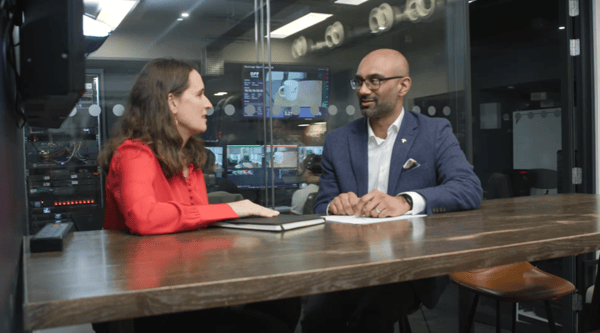
Lesley-Ann Morgan: Welcome to DC close up. I'm Lesley-Ann Morgan, Global Head of DC in L&Gs Asset Management Business. This is the first in our new DC Close Up series, a space to step back and focus on DC issues that matter now and those that will shape the longer term. Alongside industry guests, we'll get into the issues shaping DC pensions from an innovation, investment and regulatory perspective, and crucially, what they actually mean for people saving into them. Today, I'm joined by Jayesh Patel, our UKDC Head of Distribution, and we're going to kick things off with a bird's eye view and a perspective of the DC landscape. Welcome, Jay.
Jayesh Patel: Thank you very much. Thank you, Leslie-Ann. It's really an interesting time across the UKDC market. The pace is really evolving. We're seeing lots going on. There's increased regulation, we're seeing more innovative investment strategies, more support about people approaching the retirement, and of course, we have more complex needs to fulfil and deliver to members. But I'm really interested to get your perspective. You worked for over 30 years in over 30 markets and I'd be really interested to know what's so unique about the UK market, what's different to other countries and do you see any convergence?
Lesley-Ann Morgan: Yeah, I think I'd probably take that, I'd probably take that first from a regulation perspective. Regulation can be a bit boring, but one of the great things about regulation is at least things get done. So if we start with let's think about Australia and the UK, what's going on there? So there's a big move towards having less schemes in both the UK and Australia. What's the point of that? Why do we need less schemes? Well, there's probably 3 main reasons for that. One is scale, so we can get larger pension schemes all working together in one way. It can reduce costs, it can also improve the amount of investment complexity that we can put into those investment schemes, those those pension schemes. So it's a regulation in respect of Australia and the UK has had a big impact. I mentioned about cost. Cost has come down around the world for DC pension scheme members. That's partly due to the size that I've just talked about, but also to do with a lot more passive management being used all around the world. And then I would also say there's a lot more focus on decumulation now. I hate that word decumulation, but it means basically when people get into retirement, what should people be doing? And there hasn't been a lot of focus up to this point because there hasn't been that much money in DC for people who are actually in retirement. But now what you see in the US, Secure 2.0 has started to make some changes about when people can take their pension and also allows for a bit more flexibility and annuities. And in Australia, they've got the retirement income covenant, which is their way of dealing with retirement. But in the UK, we've gone down a slightly different route. We're actually going to have a default, which none of the other countries have done yet. So I think that's quite exciting and shows that we're perhaps more innovative than some of the other countries.
Jayesh Patel: So if you had to shortlist two or three issues that really defined DC this year, what would they be?
Lesley-Ann Morgan: I would say probably if I was to pick the top one, I think probably would be the pension scheme bill that's coming out probably late spring this year. We don't quite know when, but that will bring quite a lot of big changes for DC and the UK. So first of all, it will bring value for money. Value for money is not just about fees. So value for money is what does the member actually get at the end of the day. So what do they get in terms of performance? How much are they paying for it? What kind service do they get for that? So value for money is going to come out and there's a big consultation underway at the moment. I'd also say as part of that Pension Schemes Bill, we're going to get this default accumulation or default solution. That's a big change and obviously we're working behind the scenes on what that's going to look like. We don't actually know what the regulations are going to say yet, but that's something quite exciting to look forward to.
And I guess if there was a third one that I would pick at, I would kind of say maybe support because it's great to have all of this regulation. But ultimately, the end of the day, we're dealing with human beings. And if they don't kind of know what they've got in their pension or they don't have any idea about how it should be invested when they get to retirement, they're going to need a lot more support from providers like us. So Jayesh, you're talking to employers every day. Does any of this ring true with what you're hearing from them?
Jayesh Patel: Absolutely. I mean, I think the first thing is clients, whether it's employees or trustees, they want stability. They want it to be simple. Pensions, as we know is a long term savings vehicle and many clients are just looking to strategize not just for the next 12 months, but on in the future. There's a lot going on as we discussed. So thinking about what that longer term strategy will look like is something that employers, trustees or constantly thinking about. We're also recognising we're seeing that many employers set up their DC plans in the UK for the first time over that 10 years ago, largely around automatic enrolment. But many moved from defined benefit plans to DC and didn't maybe give us much thought about how this would look like in years to come. So we're seeing more companies strategize and think about what that looks like, potentially working with providers like ourselves about how we can go one step further. You mentioned engagement there. So what can we do to really support members? And again, one of the big things that you mentioned earlier was how do we support members at retirement? More and more members are coming now to retirement, really need a lot of help. We see that from ourselves as a pension provider. How can we stop that value leakage, as we call it, to stop people making bad or poor decisions and making sure that we really give an optimum solution? So I would say those are the three things that really employees are thinking about as part of their broader DC strategy.
So Lesley-Ann, where do you think the industry is making progress and where do you think we really need to go one step further?
Lesley-Ann Morgan: I would say, I mean, as, as you've said, Jay, I've, I've worked in pensions, particularly DC pensions for over 30 years. And I would say that the UK is really getting its act together right now. I mean, there has been a very glacial change over many years, but now with this regulation coming in, there is going to be a lot of change coming. So the point around scale, value and investments, I think are going to be a game changer in the UK. So scale, what does that bring? That can bring better governance, that can also bring lower fees. But it's not just about fees, obviously, it's also about better service as well. So I think scale can bring a lot of things, a lot of benefits to members. When we think about the investments, I really feel on the DC side that that's it's been lacking for such a long time. I mean, for well over a decade, I've been talking about the need to be able to invest in illiquid assets in defaults, because when people put their money into a default and a DC scheme, it's in there for a really long period of time. We should be able to sweat those assets as much as they got sweat in the DB schemes, right? So I think employers and trustees really get this point and are, you know, we're seeing increasingly are, more enthusiastic about embracing having more complex investments in their lineup for DC.
Jayesh Patel: And Lesley-Ann what's evolving?
Lesley-Ann Morgan: Well, we haven't talked about dashboards at all, actually, Jay. So dashboards, just to remind everyone what they're about. The government is going to make it so that every individual can see where all of their pension pots are in the UK and they'll be all over the place. I think on average people have 10 jobs over a career, so they'll have lots of little pots all over the place. So the point of the dashboard is so that people can actually see where all of their different accounts are. Now dashboard's been talked about for a long time. I think the first time they were talked about publicly was probably the budget in 2016, but might have even been talked about before that. So we're talking about 10 years. It still hasn't happened. Looks like it will probably come out sometime next year, hopefully. So I think that's great. It's going to be fabulous that people can see what they've got and also they'll be able to see what income they can get. But I still think there's a problem because just giving people a dashboard isn't necessarily going to solve it for people, right? Because maybe unlike you and me, people do not get up in the morning and have their toast or their cereal or their protein shake and say, you know what, I wonder how my pensions doing today? I think I'll just check that dashboard. So that whole point around engagement is so important. You know, how do we get people to engage with what they've got, what they, what they need to save more for or maybe how they need to be invested differently? So I think there's a lot to do here with getting people to focus at the right times with the right methods on this particular problem.
So Jay, let's turn the lens on ourselves. What are we doing differently?
Jayesh Patel: A lot. And it's been a really exciting period, particularly the last couple of years. And I'll try to limit myself to three, Lesley-Ann, so bear with me. I think the first thing is really proud and how we've approached providing an excellent member experience. And that's particularly from an administration perspective. There's a lot of talk about what good administration look like. And what we've really tried to focus on is more straight through processing, more digitization. It really then helps us and use of AI and robotics to help reduce the, the waiting times for members just to make sure that they can get the support they can. What that allows us to do then is really focus on the moments that matter when people do come in, it's difficult for people and we need to really make sure we can support them. So that's, that's the first thing I would say. The second one is around investments, which you've spoken about the, the change and the evolution of our investment strategies has been great. I think you mentioned that DC has grown up particularly from investments and we’re now starting seeing that. So really proud of, you know, being the first providers to launch a Sharia offering to make that more inclusive to people. But also developing our own private markets offering, which are now embedded in our default strategies and providing investment opportunities to members that haven't had that in the DC plan. I think the one that I'm probably most proud of in terms of is the one that's making the most impact for members and that's how we're looking to engage members as you rightly say earlier. So we've really taken approach and been on a journey for the last two years. We carried out a significant amount of focus groups and interviews with individuals about how do they want to communicate, how do we best engage and what people told us. Well, they don't want jargon, which is clear. We use a lot of it in this industry as you well know. It needs to be individual and almost personalised to them and it needs to be holistic. So it needs to go beyond just pensions. People look at their finances in broad terms. So what we have done L&G is we've combined data in terms of what we know about individuals. We've combined some market leading tech and we have really combined behavioural science. We need to think about how people act and engage with pensions and what that's allowed us to do is develop our app offering and our digital guidance journeys to really support. And what we're most proud of is actually the action that people are taking from that. So one in five individuals going through our guidance journey and now taking some meaningful actions that could be consolidating pension pots, what you mentioned earlier and all the little pots they've got around could be increasing contributions and it could just be making some tangible changes to their pension plan to put them on track. And Speaking of which, the statistic that I'm most proud of is that we've seen a 50% reduction in shortfalls that members are facing at retirement having gone through the journey. So we know it works.
Lesley-Ann Morgan: That's really fabulous, absolutely.
Jayesh Patel: But there's more to come, which is just as exciting.
Lesley-Ann Mogan: I think one of the really fabulous things about joining L&G is just seeing that kind of continual push to always improve things for the member and really thinking about things from a member perspective. There's so many areas that we could talk about. We haven't had time to talk about today because if we think about investment, you know, what's going on in defaults, how are those evolving now? You know, a lot of lot of DC schemes are at scale. What's happening with private assets? What about ESG? We haven't talked at all about ESG. You know, do people still care about ESG? So that's something we should probably cover. There's also loads of research. We've done lots of research. We, we service so many million members. So we've got great data. When we look at that data, we can see that there are going to be some cohorts, some groups of people who are going to struggle as they get towards retirement because they probably haven't saved enough. So positively, what can we do to help them? So that's, that's another area that we should probably really tap into as well. And there's always new innovation in DC. Know that might sound somewhat surprising, but we know there's always new innovation in DC and one of the latest ones is how do we've provided good retirement income. And one of the ways to do that might be through collective defined contribution, something that is really flavour of the month at the moment I would say.
Jayesh Patel: You've mentioned a number of topics there and we are greatly conscious of running out of time. So I suspect there'll be more to talk about, particularly on investments and innovations.
Lesley-Ann Morgan: It's funny you should say that, Jay, because we're going to zoom in on these in more detail. And over the course of the year, we're going to be covering a range of topics from investments, private markets valued for money, innovation, behavioural science and technology as an enabler. So we're quite excited about that.
Jayesh Patel: That's a lot. And of course, if you're an employer, trustee or advisor, please do let us know what you'd like us to cover.
Lesley-Ann Morgan: Thanks, Jay. Thanks for joining us today. If you'd like to discuss today's themes in more detail, please feel free to reach out. See you again next time.